

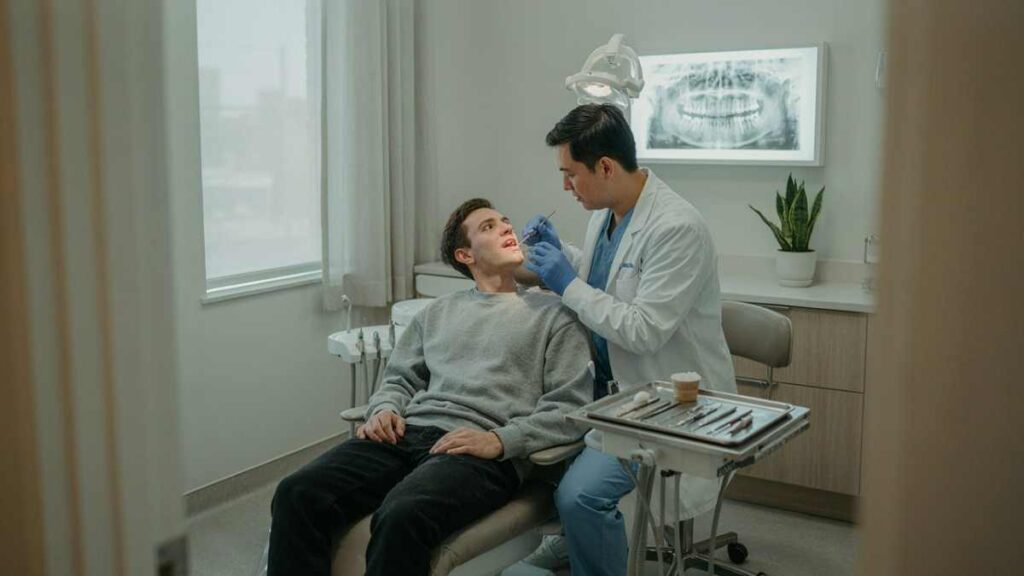
Most people know they’re supposed to be seeing the dentist on a monthly basis. Fewer people grasp why that number is relevant, or what actually happens in a checkup beyond “cleaning and looking around. If you’ve been putting off a visit, or you just need an idea of what a good routine ought to look like for your family, here’s an honest overview of what typical dental Checkups Buford citizens rely on, and how to avoid them often costs more in the long run in every sense of the word.
What Actually Happens During a Checkup
A normal appointment isn’t just someone scratching your teeth for a period of ten minutes. It typically includes a cleaning to secure rid of plaque and tartar that brushing isn’t a careful inspection of your teeth and gums for visible signs of decay as well as disease, and often X-rays to detect anything lurking below the surface. The oral surgeon will also check your bite, your jaw and at times even television for oral cancer during the same session. Most appointments still take below an hour. All that.
It’s not for getting fault. It’s to catch the small things early on, a little cavity, some gum inflammatory processes, a hairline crack, prior to their turn into a thing that harms and takes more time to fix.
Why Twice a Year Is the Standard
The six month limit is not arbitrary. If you have decent brushing procedures, plaque will continue to build up and harden into tartar, which only an expert cleaning can remove. If you leave the plaque on your teeth long enough it will lead to gum disease and tooth decay. But we catch it every 6 months or so so it doesn’t get away from hand. Some people require routine dental visits. If you have gum disease, a history of cavities, or you’re pregnant, your dentist might recommend dental exams every three to four months.
Checkups Aren’t Just for Adults
Many parents believe that kids don’t need to see the dentist as long as they have a cavity full of healthy teeth, but that isn’t the case. The dentistry for children Buford families trust usually begins around a child’s first birthday, or shortly after the first tooth breaks. Finding the dentist early helps discover problems before they turn serious and just as important helps children get used to using the dental chair instead of dreading it later on.
Children’s Dentistry Buford’s office makes an effort to ensure that these initial visits are as low-stress as possible: concise assessments, a polite explanation of what’s happening, and lots of patience. That comfort typically continues into adulthood, so kids who aren’t frightened of the dentist at six are far more likely to follow up with checks at sixteen and beyond.
What Happens If You Skip Them
Not likely to check doesn’t mean things are not happening, but it means problems will go unnoticed. A little cavity that could be treated in fifteen minutes grows a cavity that needs a crown or root canal. Gum inflammation that may be fixed with a deep cleaning develops into gum disease that could endanger your teeth. And since early tooth issues rarely cause pain, most people are unaware anything is wrong until it does.
This is also where a good general family dentistry Buford office earns its keep. Instead of bouncing between different specialists for every family member, one office can track everyone’s dental history over time, kids, parents, grandparents, and catch patterns that a one-off visit might miss.
When Checkups Turn Into Something More Urgent
Sometimes a routine checkup finds something that needs urgent attention, and sometimes an injury or severe pain means you are unable to wait six months to your next scheduled appointment. That’s where Emergency Dental care Buford comes in: an impaired tooth, a painful toothache, or a filling that falls out shouldn’t sit on a waitlist. Many places now also offer Same Day Dentistry Buford people can employ for exactly these scenarios, so a same-week problem doesn’t evolve into a same-year one.
A Simple Routine That Actually Works
In between visits, the basics are still the most important: brushing your teeth twice a day with a toothpaste with fluoride flossing once a day, and avoiding sugary snacks and drinks. None regarding this replaces an expert cleaning, but it implies that your dentist has less to fix once you come in, and that’s really the purpose.
Conclusion
One of the simplest methods to maintain your smile and avoid worse problems down the line is to have regular dental checkups for kids and adults. A fast visit every six months allows for little issues to be caught while they are still easy to treat, keeps you and your whole family’s dental health on track, and ensures there are fewer surprises if something does come up. It’s a good time to get back on track if it’s been a while because your last visit or your child has not yet had their first.
Frequently Asked Questions
1. How often should I schedule a dental checkup?
Most individuals perform well every six months. If you have gum disease, many cavities, or other health issues, your dentist may recommend checkups every three to four months instead.
2. Do checkups always include X-rays?
Not on every single visit. Dentists typically take X-rays at least once a year, or more often if they need to monitor a specific issue, such as an emerging tooth in the mouth of a child or a possible cavity between teeth.
3. My child is scared of the dentist. What can I do?
This is common and a good paediatric friendly office knows how to take take care of this. Short serene visits, clear explanations and starting early all help. Ask your dentist to pace the appointment based on your child’s comfort level.
4. What if I find a problem between checkups?
Don’t wait for your next selection. Pain, swelling, broken teeth, or a faulty filling should be noticed immediately, not sitting for months.
5. Are checkups different for kids versus adults?
The basics are the same: a cleaning and examination, but a child health checkup also assesses tooth development, the alignment of the bite and habits such as thumb sucking. Adult exams focus mainly about long-term wear, gum health, and things like grinding or bite changes.
Author Bio
This article was reviewed by Dr. Hira Khan, a dentist at Buford Family Dental. Dr. Khan is an internationally trained dentist from Pakistan who earned her DDS from New York University. She’s passionate about helping patients of all ages, from first-time toddler visits to long-time adult patients, stay on top of their oral health through consistent, comfortable care.
4536 Nelson Brogdon Blvd.,
Building A Buford, GA 30518
Phone: 678-730-2005
Email: staff@bufordfamilydental.com


