

Check your teeth with your tongue as soon as you wake up in the morning. That fuzzy, slightly sticky coating is plaque. You have it right now. So does everyone you know, and it comes back within hours of brushing.
Most people only hear the word at a dental appointment, usually right before a lecture about flossing. So let’s cover what you actually want to know: what plaque is, what it does to your teeth, and how to remove it.
What Is Plaque?
Plaque is a thin film of bacteria, saliva, and leftover food that clings to your teeth. It’s clear or pale yellow, which is why you rarely spot it in the mirror. Most bacteria that live in your mouth do not cause any harm. The trouble is that the ones in plaque love sugar. Every time you eat or drink something sweet or starchy, they feed on it and give off acid.
What Does Plaque Do to Your Teeth?
That acid does the damage. It softens enamel, the hard outer layer of your teeth, and over weeks and months it can eat a small hole through it. That hole is a cavity. Nobody feels it at first, which is how a tooth that seemed fine last month turns into a toothache.
Plaque also hurts your gums. When it sits along the gumline, your gums get inflamed, turn red and puffy, and bleed when you brush. That’s gingivitis, and it’s very common and very fixable. Ignore it, and the infection can move below the gumline and start breaking down the bone that holds your teeth in place. That stage is periodontitis, and it’s a major reason adults lose teeth.
Smaller annoyances come along too: bad breath from the bacteria, and dull-looking teeth when stains settle into the rough surface.
Why Plaque Turns Into Tartar
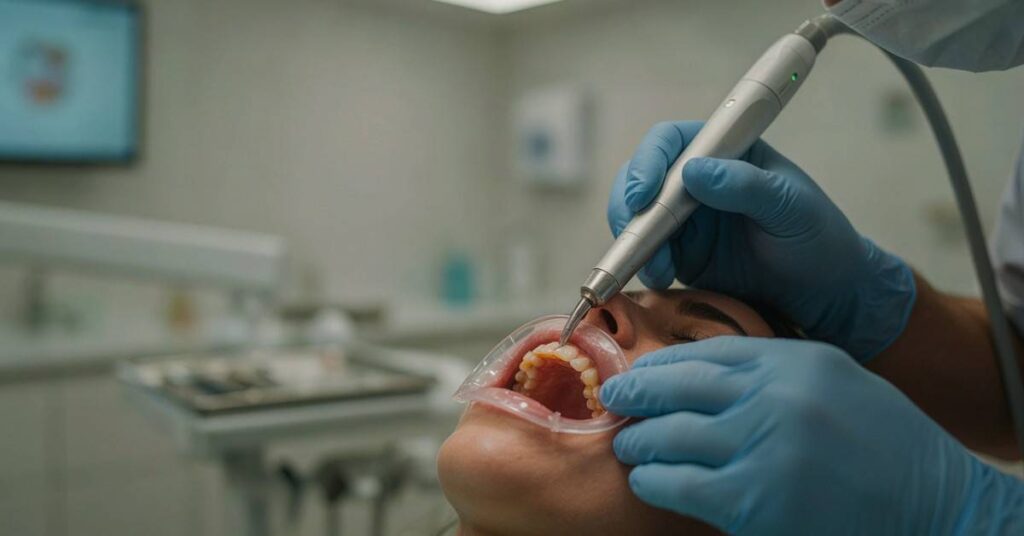
Here’s the part people miss. If plaque stays on your teeth, minerals in your saliva harden it. Dentists say this can start within a day or two. Once it hardens, it’s called tartar (or calculus), and it’s rough, yellow or brown, and stuck to the tooth. You can’t brush it off. Not with a harder brush, not with baking soda, not with the coconut oil rinse you saw online. Only a dental hygienist can remove it properly using specialized tools.
That’s the whole case for dealing with plaque every day. Fresh plaque comes off with a toothbrush. Tartar needs an appointment.
How to Remove Plaque From Teeth
- Brush twice a day for two full minutes with fluoride toothpaste. Use a soft brush, angle it toward the gumline, and go gently. Scrubbing hard doesn’t clean better. It just wears down your gums.
- Clean between your teeth once a day. You can clean between your teeth with regular floss, a water flosser, or small interdental brushes. Pick the one you’ll actually use.
- Rinse with water after meals, especially after anything sweet or sticky.
- Snack less often. The frequency of sugar consumption matters just as much as the amount you eat. Sipping a sweet drink all afternoon keeps the acid coming.
- Get a new toothbrush every three months, or earlier if the bristles become frayed or spread out.
- Schedule a professional dental cleaning every six months, or as recommended by your dentist.
If you want to see what you’re missing, ask your dentist for disclosing tablets. They stain plaque bright pink or blue, and the results are humbling.
Kids Get Plaque Too
Children tend to skip the back teeth and rush the whole thing. Most need a parent checking their work until around age 7 or 8. Building good habits early is the point of dentistry for children in Buford, and a few minutes of “show me your teeth” at bedtime does more than any lecture.
When Plaque Has Already Done Damage
Sometimes you find out late. A cavity that reaches the nerve can need root canal treatment in Buford. A badly decayed tooth may need a crown or a filling, which falls under restorative dentistry services. Gum disease past the early stage is a job for a periodontist in Buford GA.
There’s an upside to all this. A good cleaning removes tartar stains too, so teeth often look brighter right afterward. That’s worth knowing before you spend money on teeth whitening in Buford.
How Buford Family Dental Can Help
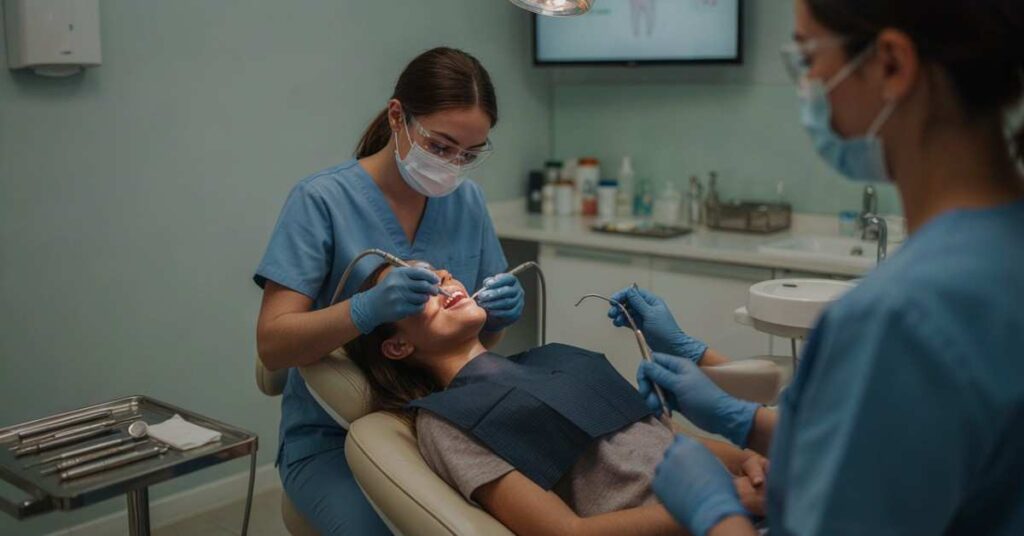
You can handle the daily plaque yourself. The tartar and the early warning signs are where a dental team earns its keep. At Buford Family Dental, we offer family dentistry in Buford GA for every age, including general dentistry in Buford GA, so parents and kids can see the same office. Regular dental checkups in Buford include a professional cleaning and an exam that catches trouble while it’s still small. If you need urgent dental care, same day dentistry in Buford may help you get treatment without a long wait.
No insurance? Our dentist membership plan in Buford is set up for dental care without insurance in Buford. Call 678-730-2005 or visit bufordfamilydental.com.
Conclusion
Plaque is normal. Ignoring it isn’t. It’s a film of bacteria that causes cavities, gum disease, bad breath, and tartar when it stays put. The fix is simple: brush twice a day, clean between your teeth, snack less often, and see your dentist about every six months. Do that consistently and plaque stays a minor daily chore instead of a bigger problem.
FAQ
1. What is plaque in teeth?
Plaque is a sticky film of bacteria, saliva, and food particles that forms on your teeth throughout the day. If it isn’t cleaned away, it can cause cavities and gum disease.
2. What does plaque do to your teeth?
The bacteria in plaque make acid that wears down enamel and irritates your gums. Over time that can lead to cavities, bleeding gums, bad breath, and tartar.
3. How do I remove plaque from teeth at home?
Brush twice a day with fluoride toothpaste, clean between your teeth daily, and cut back on frequent sugary snacks. These habits remove fresh plaque before it hardens.
4. Can I remove the tartar myself?
No. Tartar is a hardened plaque, and brushing won’t remove it. A dentist or hygienist needs to clean it off with professional tools.
5. How often should plaque be removed professionally?
Most people should get a cleaning and checkup about every six months. Your dentist may suggest more frequent visits if you’re prone to gum disease.
About the Author
Dr. John Jeoung is a dentist at Buford Family Dental in Buford, GA. Originally from South Korea and raised in Lawrenceville, GA, he earned a Chemistry degree from the University of Georgia, a master’s in Biomedical Sciences from Iowa State University, and his dental degree from Temple University in Philadelphia.
4536 Nelson Brogdon Blvd.,
Building A Buford, GA 30518
Phone: 678-730-2005
Email: staff@bufordfamilydental.com


