
Healthy jawbone provides the foundation for everything from chewing function to facial structure — yet bone loss occurs more commonly than most patients realize. Tooth extraction, gum disease, trauma, and even long-term denture wear cause the jaw to deteriorate over time, often leaving insufficient bone for dental implants or other restorative treatments. Bone grafting reverses this loss by rebuilding what nature has taken away, creating the stable foundation needed for lasting tooth replacement. Patients in Buford, Sugar Hill, and surrounding Gwinnett County communities can now access advanced bone grafting procedures at Buford Family Dental.
Advanced Training in Bone Regeneration
Dr. Jay Patel performs bone grafting procedures with the precision developed during his four-year oral and maxillofacial surgery residency at Womack Army Medical Center. His training included complex reconstructive cases — rebuilding jaws damaged by trauma, disease, and extensive tooth loss using the latest grafting techniques and materials. Dr. Patel holds board certification from the American Board of Oral and Maxillofacial Surgeons and maintains active membership in the American Academy of Implant Dentistry, keeping current with advances in regenerative procedures. “Every grafting case is unique,” says Dr. Patel. “Understanding the biology of bone healing — how grafts integrate, what factors promote success — allows me to tailor each procedure for optimal results.”
How Bone Grafting Works
Bone grafting places specialized material into areas where jawbone volume has been lost. This graft material serves as scaffolding — a framework that encourages your body’s natural healing mechanisms to generate new bone cells. Over several months, these new cells gradually replace the graft material while integrating with surrounding native bone. The result is regenerated bone that matches the strength and density of natural tissue. Modern grafting materials and surgical techniques have made these procedures highly predictable, with success rates exceeding 90% when performed by experienced oral surgeons.
Bone Grafting for Dental Implants
Dental implants require sufficient bone height, width, and density to anchor securely and function properly for decades. Unfortunately, the bone loss that follows tooth extraction often leaves patients without adequate structure for implant placement. Bone grafting solves this problem by rebuilding the jaw to implant-ready specifications.
Several scenarios commonly require grafting before implant surgery. Patients missing teeth for extended periods typically experience significant resorption. Those who have worn dentures for years often find their ridges have flattened considerably. Teeth lost to periodontal disease frequently leave behind compromised bone. Even recent extractions benefit from socket preservation grafts that minimize the bone loss that would otherwise occur during healing.
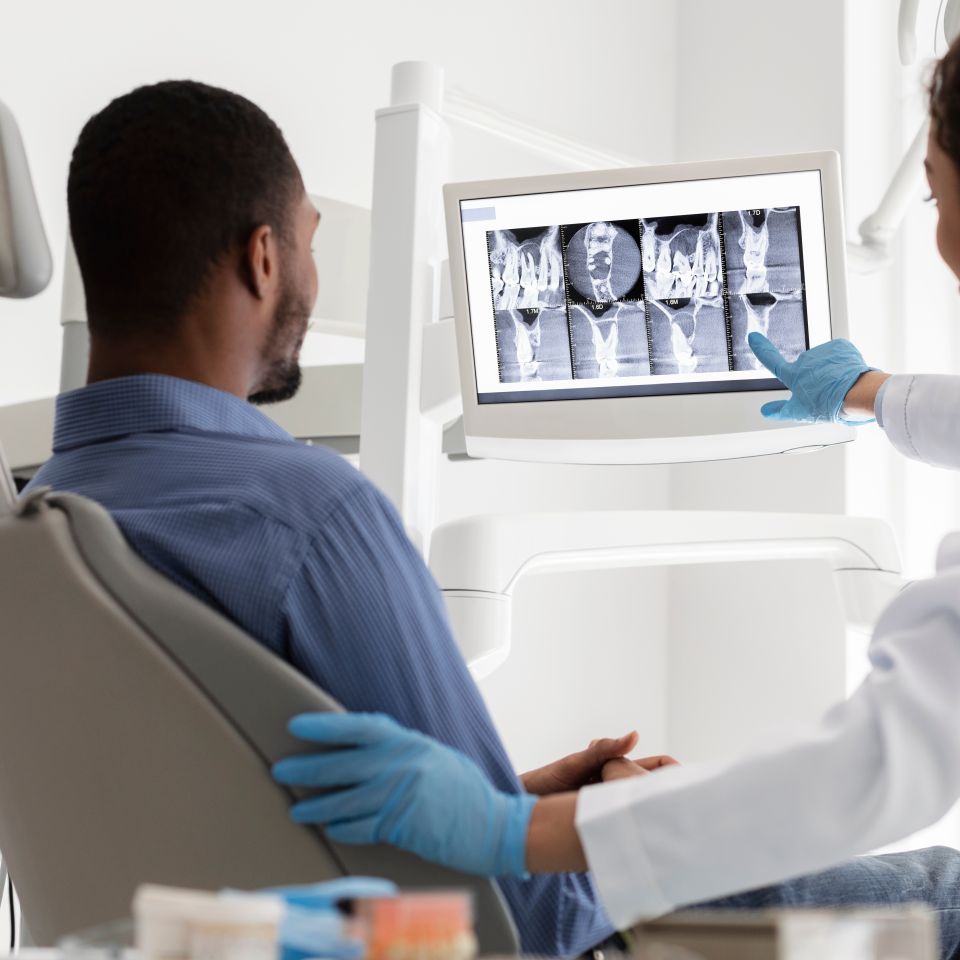
Timing varies based on individual circumstances. Some patients receive grafts and implants during the same surgical appointment when enough existing bone provides initial stability. Others require a staged approach — grafting first, followed by implant placement three to six months later once the regenerated bone has fully matured. Dr. Patel uses 3D cone beam imaging to assess your specific anatomy and determine the ideal treatment sequence for long-term implant success.
Bone Graft Materials
Dr. Patel selects grafting materials based on the extent of bone loss, treatment goals, and patient preferences.
Autograft: Bone harvested from elsewhere in your own body — commonly the chin, back of the jaw, or hip — offers excellent biological compatibility. The living cells within autograft material actively participate in bone regeneration.
Allograft: Carefully processed human donor bone from accredited tissue banks provides effective scaffolding without requiring a second surgical site. Rigorous screening and sterilization ensure safety.
Xenograft: Bovine (cow) bone undergoes extensive processing to remove organic components while preserving the mineral matrix that supports new bone formation.
Synthetic Graft: Laboratory-created materials using biocompatible compounds like calcium phosphate offer consistent properties and unlimited availability.

What to Expect During Your Procedure
The procedure begins with local anesthesia, with IV sedation available for patients who prefer deeper relaxation. Dr. Patel makes a small incision to access the treatment area, places and shapes the graft material to achieve proper contours, and typically covers the site with a protective membrane that guides healing. Sutures close the incision, and you receive detailed aftercare instructions along with prescriptions for pain management and antibiotics if indicated. Most patients return to normal activities within a few days, though the bone itself continues maturing over the following three to six months.
Frequently Asked Questions About Bone Grafting
Anesthesia and available sedation ensure you feel no discomfort during the procedure. Post-operative soreness, swelling, and bruising are normal but typically manageable with prescribed medication and resolve within a week.
Soft tissue healing occurs within one to two weeks. Complete bone regeneration — when the graft fully integrates with native bone — requires three to six months depending on graft size and location.
When performed by an experienced oral surgeon using appropriate techniques, bone grafts succeed over 90% of the time. Factors like smoking, uncontrolled diabetes, and poor oral hygiene can reduce success rates.
Patients with adequate existing bone can often proceed directly to implants. Dr. Patel uses 3D imaging to evaluate your jaw and determines whether grafting is necessary for your specific situation.
Costs vary based on graft material, extent of treatment, and sedation choice. Our team provides clear pricing during your consultation, and many insurance plans cover grafting performed in preparation for implants.
Short or narrow implants work for some patients with moderate bone loss. Zygomatic implants anchor in the cheekbone rather than the jaw. However, bone grafting remains the gold standard for creating optimal implant conditions in most cases.

Why Choose Buford Family Dental for Bone Grafting
Dr. Patel’s specialized training in reconstructive surgery — combined with his focus on implant dentistry — makes him ideally suited for bone grafting procedures of all complexities. Patients benefit from having their grafting and eventual implant placement performed by the same surgeon, ensuring continuity and coordinated treatment planning. Advanced 3D imaging, a comfortable office environment, and flexible sedation options make the process as smooth as possible.
Begin rebuilding your foundation for dental implants by scheduling a consultation at Buford Family Dental. Call (678) 730-2005 or request an appointment online.