
A tooth becomes impacted when it cannot emerge normally through the gum tissue — remaining partially or fully trapped beneath the surface. While wisdom teeth account for most impactions, any tooth can fail to erupt properly, including canines, premolars, and occasionally front teeth. Left untreated, impacted teeth create persistent problems: infection, cyst formation, damage to neighboring teeth, and disruption of proper bite alignment. Surgical removal or exposure eliminates these risks and restores oral health. Patients throughout Buford, Sugar Hill, and Gwinnett County trust Buford Family Dental for expert impacted tooth treatment.

Specialized Surgical Training for Complex Cases
Dr. Jay Patel brings extensive impaction experience to Buford Family Dental. His four-year oral and maxillofacial surgery residency at Womack Army Medical Center included hundreds of impaction cases spanning the full spectrum of complexity — from routine wisdom tooth removals to deeply buried canines requiring orthodontic collaboration. Board certified by the American Board of Oral and Maxillofacial Surgeons, Dr. Patel understands that impactions vary dramatically in position, depth, and relationship to vital structures. “No two impacted teeth present the same challenge,” explains Dr. Patel. “Detailed imaging and careful surgical planning allow me to approach each case with precision, whether it’s a straightforward extraction or a delicate exposure near a nerve.”
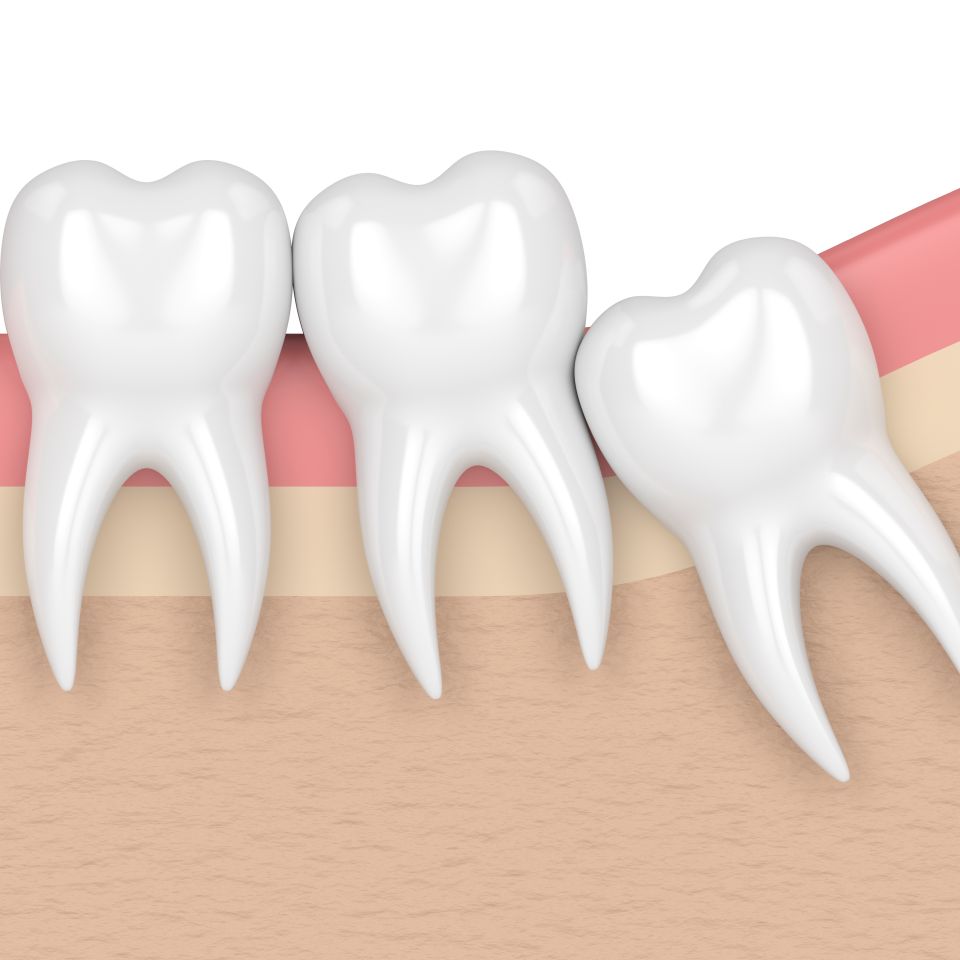
Understanding Tooth Impaction
During normal development, teeth form within the jawbone and gradually migrate toward the surface, eventually breaking through the gum tissue to assume their position in the dental arch. Impaction occurs when something interferes with this natural eruption process. Overcrowding leaves insufficient space for emerging teeth. Abnormal tooth angulation sends teeth growing in the wrong direction. Dense bone, excess gum tissue, or obstruction from other teeth can block the path. The result is a tooth that remains fully buried (complete impaction) or partially emerged (partial impaction) — each creating distinct problems.
Types of Commonly Impacted Teeth
Wisdom Teeth: Third molars are by far the most commonly impacted teeth, affecting roughly 90% of people. The back of the jaw typically lacks adequate space for these final molars to emerge properly.
Canines: The upper canines (eyeteeth) rank second in impaction frequency. Because canines play an essential role in bite function and smile aesthetics, treatment often aims to preserve them through surgical exposure and orthodontic repositioning rather than extraction.
Premolars: Second premolars occasionally become impacted due to crowding or early loss of baby teeth that would normally guide their eruption path.
Other Teeth: Supernumerary (extra) teeth, central incisors, and other teeth can experience impaction, particularly when developmental abnormalities or genetic conditions affect tooth formation.

Recognizing Impaction Symptoms
Some impacted teeth remain asymptomatic for years, discovered only through routine dental X-rays. Others produce unmistakable warning signs. Patients commonly report persistent aching or pressure in the affected area, swelling and tenderness of the overlying gum tissue, difficulty fully opening the mouth, and unpleasant taste or odor from infection around partially erupted teeth. Adjacent teeth may shift or become damaged. Headaches, jaw stiffness, and swollen lymph nodes sometimes accompany complicated impactions.
Treatment Approaches
The appropriate treatment depends on which tooth is impacted, its position, and whether preserving it benefits long-term oral health.
Surgical Extraction: When an impacted tooth serves no functional purpose or cannot be saved — as with most wisdom teeth — removal eliminates the problem permanently. Dr. Patel carefully uncovers the tooth, removes surrounding bone if needed, and extracts the tooth before closing the site with sutures.
Exposure and Orthodontic Bracketing: For impacted canines and other functionally important teeth, surgical exposure combined with orthodontic treatment brings the tooth into proper alignment. Dr. Patel uncovers the buried tooth and bonds a small bracket with an attached chain. Over subsequent months, the orthodontist applies gentle traction through this chain, guiding the tooth into its correct position in the dental arch.

What to Expect During Treatment
Advanced 3D imaging maps the impacted tooth’s exact position and relationship to nerves, sinuses, and adjacent teeth before surgery begins. Local anesthesia ensures comfort, with IV sedation available for patients who prefer a sleep-like experience. For extractions, Dr. Patel creates a tissue flap, removes any overlying bone, extracts the tooth — sometimes sectioning it for easier removal — and closes the site. For exposure cases, the tooth is uncovered just enough to attach the orthodontic bracket before the area is sutured. Recovery typically involves one to two weeks of gradually diminishing swelling and tenderness, with most patients returning to normal activities within a few days.
Frequently Asked Questions About Impacted Teeth
Not necessarily. Some deeply buried teeth that cause no symptoms and pose minimal risk can be monitored. However, most impactions eventually require intervention to prevent complications. Dr. Patel evaluates each case individually.
Evaluation is recommended during the mid-to-late teenage years, typically between ages 16 and 19. Younger patients often experience easier extraction and faster recovery because tooth roots aren't fully formed and bone is less dense.
Most patients feel significantly better within three to five days and return to normal activities. Complete healing of the surgical site takes one to two weeks, with underlying bone remodeling over several months.
Extraction relieves pressure that impacted teeth place on adjacent teeth, often preventing damage and preserving alignment. Orthodontic treatment may be recommended if shifting has already occurred.
Anesthesia and available sedation ensure you feel nothing during the procedure. Post-operative discomfort is normal but manageable with prescribed medication, ice, and rest.
Most dental and medical insurance plans cover impacted tooth extraction when deemed medically necessary. Our team verifies your benefits and provides clear cost estimates before treatment.

Expert Impacted Tooth Care in Buford
Having a board-certified oral surgeon at your trusted family dental practice means expert impaction treatment without traveling to an unfamiliar surgical center. Dr. Patel collaborates with our general dentistry team and local orthodontists to ensure coordinated care throughout treatment. Buford Family Dental offers advanced 3D imaging, multiple sedation options, and a comfortable environment designed to ease surgical anxiety.
Schedule your impacted tooth evaluation at Buford Family Dental by calling (678) 730-2005 or requesting an appointment online. Early treatment prevents complications and protects your oral health.